Saturday, November 10, 2012

Ovation for over 15 minutes

"Ovation" is defined as "an enthusiastic public reception of a person, marked especially by loud and prolonged applause".  What was the duration of the longest standing ovation you have ever seen or heard?  For a program that lasted for one hour and thirty minutes?  Three minutes?  Five minutes?  Seven minutes?  Ten minutes?  .....

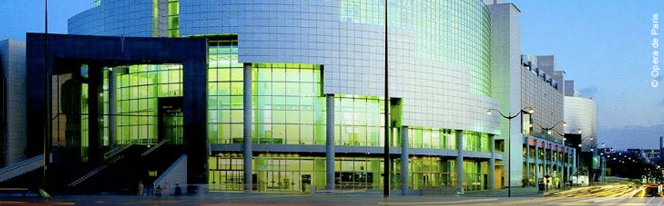
We were witnesses for a standing ovation for over fifteen minutes at the end of a ballet performance in Opera D Bastille, Paris, France  (picture of the building is given below).  It was still continuing when we left the Bastille auditorium and actually do not know the exact duration for which it lasted!
 
Clapping and acknowledging some good effort is a common feature in functions and performances. All over the world  leaders, artistes, sports persons or performers of any kind get encouraged when they receive clapping, applause or an ovation.  A standing ovation is a higher form of acknowledgement of a job well done or a distinction truly earned. An extended applause or a long ovation is indeed an excellent tonic for performers and spurs them to even better efforts in subsequent shows. For a real and dedicated  artiste, appreciation of his or her effort by a mature and knowledgeable audience is worth even more than the financial rewards a show brings.  Politicians thrive on the applause and ovations of their followers.  That the ovation given to them is by a hired or hijacked audience matters little to such leaders.  An ovation is an ovation for them!  It is not uncommon to hear clapping even before some start their speech or performance.  Such applause may be to prevent the beginning of the ordeal or bring an abrupt end to a painful performance.  Thick skinned as they are, such performers(?) would  have tuned themselves to carry on with their act unmindful of whether the gathering really wants it or not. 

We can hear muted clapping in many functions and such applause by a handful of persons among a big gathering is often embarrassing.  Untimely appreciation by a small section of the crowd creates an awkward situation instead of enthusing the performers.  People sitting through the length of the programs leave the hall minutes before the performance ends, showing scant respect for the efforts of the performers.  In many shows or performances, especially the ones like ballet, drama etc., the artistes are called upon the stage at the end of the show.  Any artiste or backstage support staff member has a right to be introduced to the audience in every show.  After all, the show is a result and end product of  days and months of the hard work by these very people.  Their importance is known to the Producer or Director of the show.  Even if one of them is missing half an hour before the show begins, they may even have a heart attack.  Audience, especially in parts of our country, need to appreciate their importance and contributions by giving a befitting ovation to these artistes.  This should be so irrespective of the likes or dislikes of the individual audience.

The city of Paris, capital of France, is one of the most vibrant cultural centers in the world. Bastille Opera House in Paris is one of the centers dedicated for performing arts.  The place "Bastille" has its own history.  A fort was constructed at this place in the 13th-14th century to protect the eastern part of the city of Paris from the enemies. (Picture of the fort as it existed before storming is given alongside).  The fort was converted into a prison during the time of Louie XIII.  The jail housed about 50 prisoners at a time.  In course of time, this fort prison was used by the ruling elite to curb activities of any nature which was considered by them as against the persons in authority.  When the patience of the oppressed people ran out, they stormed the Bastille fort.  Storming and destroying of the Bastille fort prison happened on 14th July 1789.  This started the famous "French Revolution" and the entire fort was destroyed during the next four months.  14th July is observed as "National day of France" since then.  It is a public holiday and a tradition has developed now to honor the martyrs on that day.

A beautiful building complex has been constructed at the place where the destroyed Bastille fort stood and it was inaugurated on 13th July, 1989. A metro station located at the basement of the building makes visiting the culture center a pleasant experience.  Its main auditorium has 2,703 acoustically consistent seats.  Its stage facilities are considered unique.  The integrated scenery, costume and accessory workshops, as well as its numerous work areas and rehearsal rooms make the Opera Bastille a great modern theater. Its orchestra pit can accommodate as many as 130 musicians and can be covered.  It is mobile and adjustable.  The main stage area is 45 meter high and 30 meter wide.  Its 25 meter depth provides comfort for stage managers to experiment innovation using the scenery turntable.  The stage has 9 elevators which is used in creation of several levels in the shows and the three main elevators fetch the required scenery up from below stage.  Scenery can be stored temporarily between the stage, workshops and rehearsal stage.

Our host in Paris had painstakingly reserved seats for us for a show in this auditorium on 13th July 2008, which was the 19th anniversary of the inauguration of the building and the eve of the "Revolution Day".  The show was titled "Signes" in French, meaning "Signs" in English.  It was a wonderful show and the standing ovation given to the Director and artistes lasted for over fifteen minutes.  The show itself  was wonderful in concept, design and on-stage execution.  As this piece has already become lengthy, it will be covered in another blog post titled "Painter meets Musician". 
Wednesday, November 7, 2012

Did you Vacuum Clean Today?

There were two families living in the same street of the small town as we did, some fifty years ago.  The two families were headed by two brothers.  Their big ancestral house and other properties including agricultural lands was divided between them equally.  Elder brother occupied the eastern portion of the house and the younger brother occupied the western part.  Both were teachers by profession and commanded respect from the community, respect earned by their polished and courteous behavior.  The two families lived in perfect harmony and their children too had excellent relationship between them.  More importantly, the two wives, co-sisters as many would like to call, were like twin sisters.

Now a question may arise as to what is the purpose of this piece when everything is just perfect.  The two brothers differed in their views about sharing responsibilities of daily life.  The system of sharing routine work taught and practiced in the family were different.  Elder brother believed that the work should be shared by all the children at home irrespective of the nature of work.  All children, boys or girls, were expected to wash their respective clothes and clean their plates after taking food. Any child could be asked to attend outdoor work like bringing the items for daily use from shops.  The practice in the younger brother's house was totally different.  All indoor work was to be done by the girls and outdoor work was the exclusive domain of the boys.  A girl child would not be asked to go to the market for bringing vegetables or such other items.  No boy was asked to wash clothes or clean dishes.  This made an interesting study for me.  There were no such rigid rules in our own house; any child could be asked to do any work assigned to them.  Assignment of work depended basically on the nature of work, age of the child and capacity to carry out the desired purpose.  Both brothers were right in their own way though opinions may differ when the practices are viewed and evaluated in present times.

Much water has flowed under and over the bridge in fifty years.  Society and its outlook has changed enormously in this time span and there is little difference between men and women today as far as handling different jobs are considered.  Women are still discriminated against, but the spirit has indeed changed for the better. From running houses to flying planes and venturing into outer space, there is no bar and girls have been eminently successful in all vocations.  Many families are encouraging their daughters to take up professional jobs which were exclusive male bastions some years ago.  When both husband and wife are engaged in matching professional pursuits, sharing of work at home also becomes equally important.  Some men are excellent cooks, but the kitchen work still stays with the wife generally.  When the tasks are identified and apportioned, vacuum cleaning generally falls on the husbands side.  This provides an excellent chance to the wife to keep reminding the husband every week: "Have you vacuum cleaned today?"

One husband who was allotted vacuum cleaning at home did his job faithfully for several months.  But he probably disliked the job or disliked even more being reminded by the wife again and again.  There is a maxim in HRD: assign the toughest job to the laziest person in the team.  He will find the easiest way to do it, finish it fast and get back to lazying!  This young man could never be accused of being lazy. But he was innovative.  He found out an excellent way of getting the house vacuum cleaned - he did lot of research and found out about Neato.


Neato is a robot vacuum cleaner; only it does not look like a Rajanikanth model Robot. It looks just like a simple weighing scale. It is battery operated an is smart.  Armed with a 360 degree laser range finder, it scans the room, maps and plans its work and later systematically cleans the entire room.  Its sensors enable it to avoid obstacles like furniture, walls, stairs and even pets.  Its boundary markers tell Neato where not to go.  It can remove all the hairs dropped by pets like cats and dogs.  It takes care of itself and cleans all floor surfaces.  The dirt is collected in a dirt bin inside the robot and can be emptied.  No need for trash bags and recurring expenditure in buying such bags.  Filters provided in it can be changed periodically to make it more effective.  Its blades and batteries can be replaced. When the battery is replaced in the middle of the cleaning, it starts from where it left off and there is no need to set it again!
 
Now "Neato" vacuum cleans when the husband plays with his other electronic gadgets. He now has an assistant in "Neato" which is not a sweeper but a real vacuum cleaner.  He may be advising his friends (other husbands) to spend $ 400 to $500 on a "Neato" and avoid the frequent question form their wives: "Have you vacuum cleaned today?"
 
Of course, he may not know what the wife is thinking.  She must be thinking of another assignment for him to protect her right to go on asking that favorite question:  "Did you ...........today?"!   

Tuesday, October 9, 2012

Three Treasures of Travancore

Fifteen months ago, in July 2011, a rich treasure was found in a temple in Travancore or, as it is presently called, Thiruvananthapuram.  The town or city, the capital of Kerala, is Ananthapuri, the city presided ovr by Lord Anantha.  Anantha in short for Ananthapadmanabha, the Lord in yoganidra; lying in sleeping posture on Aadishesha.  Thiru-Anantha-Puram with respect and devotion, but called as Travancore by the British.  The five sealed vaults in the Padmanabha Swamy temple were opened after 130 years and inventory of the contents found in them were taken in a process that lasted several days.  The hoard of gold, diamonds, emeralds, precious stones, jewellery and artifacts beat even the wildest imagination of a true treasure.  It is being variously described as richer than King Salomon's mines and Indiana Jones's perceived treasure hunt. Contents included over a ton of gold, sacks of diamond and other precious stones, gold necklaces over 3 meters (10 feet) long and weighing over 2.5 kg.  The treasure's real value is a matter of speculation; it is quoted variously as 100000 crore rupees (One lakh crore rupees), 22 billion US Dollars etc.  Some say its antique value exceeds 100 billion US Dollars.  That would be more than the total wealth of Bill Gates and Warren Buffet put together!

A hundred years ago, three treasures were found in Travancore.  In fact, centenary celebrations are being held during the last two years, but not many have taken note of it.  That was mainly because it was not the treasure of Goddess Lakshmi, but her daughter-in-law Goddess Saraswati.  The three treasures were unearthed between 1909 and 1912. These three sets of treasure have given us an insight into a vast area of knowledge and a peek into the rich heritage of our forefathers.

In 1909, R Shama Sastry found a manuscript of Kautalya's "Arthasastra" in one of the private libraries of Travancore. The scholar took great pains to edit the manuscript and bring it to light. Chanakya or Kautalya's life and work were centered around Maghada (Present Bihar) kingdom.  His works are believed to have been lost towards the end of Maurya Dynasty.  His treasure of wisdom was found in the form of a manuscript after nearly 2000 years, in Travancore!  This is the first treasure.  An international conference was held in Oriental Research Institute, Mysore, in 2009 to celebrate the centenary of the finding of the manuscript in Travancore and publication of the book.  Thanks to this effort of R Shama Shastry, we have the wisdom of Chanakya available to us today.

Three years later, in 1912, Mahamahopadhyaya T Ganapathy Sastri found 13 Sanskrit plays in another private library of Travancore. These were a part of the well known "Koodiyattam Plays" of Kerala.  Ganapathi Sastry was an acknowledged scholar and principal of Travancore Sanskrit college.  He sorted out the manuscripts and found that one of the plays was "Swapna Vasavadatta".  Thus came out the famous "Naataka chakra" of Bhasa Mahakavi.  A second treasure of nearly 2000 years was placed in our hands by Travancore.  A playwright par excellence, Bhasa is acknowledged as a model by Kalidasa himself, in his "Maalavikaagnimitra".  But for the finding of this treasure in Travancore, Bhasa would have been just another name like Soumilla and Kaviputra, the other two names mentioned by Kaalidasa in the same reference.

The third treasure is indeed unique.  Pandit N Ramaswami Sastriar was scanning through the old manuscripts in another private library of Travancore around the same time.  He found a bundle of 61 moth-eaten palm-leaf manuscript sandwiched between two totally unrelated works.  These palm-leaf writings were part of a nine chapter work titled "Madhura Vijayam" or "Vira Kamparaya Chariram".  The writer is Gangambika alias Gangadevi, wife of Kamparaya who is the hero of the work.  Kamparaya or Kampanna was the second son of Bukka, who co-founded the Vijayanagara empire with his brother Hakka.  The manuscript was edited and published by two other scholars, G Harihara Sastri and V Srinivasa Sastri, in 1924.

Kampanna was assigned the task of expanding Vijayanagara empire by his father Bukkaraya and sent to Kancheepuram to conquer the area.  After his victory in Kancheepuram, a strange woman visitor (believed to be Godess Meenakshi of Madurai)  meets him and advises him to proceed to Madurai and liberate that area from Sultan's rule there.  Kamparaya proceeds to Madurai, defeats the Sultan's army and kills the sultan in single combat.  Kamparaya then restores the Srirangam temple, ravaged by Malik Kafur  and Khusroo Khan, to its old glory.  Gangambika accompanied her husband to Kancheepuram and Madurai and has recorded her husband's victories as she saw them. This third treasure is a rare work of an earliest medieval  poetess and there are indications that she was from a Telugu lineage. Her account of the war and history, of the period in second half of 14th century (1370s), is considered accurate and reliable.

A subhhashita (words of wisdom) says:

पृथिव्यां त्रीणि रत्नानि जलं अन्नं सुभाषितं
मूर्खाः पाषाण खण्डेषु रत्न संज्ञा विधीयते

Pruthivyaam treeni ratnaani, Jalam Annam Subhaashitam, Moorkhaha paashana Khandeshu ratna sangna vidheeyate!

There are three precious things on this earth - Water, Food and Good or kind  words.  Only fools consider pieces of stones as Precious ones!  Kaveri river water dispute has reminded us of the first two.  We know the value of third one.  If anyone still has any doubt, King Maidas may be consulted. 

Monday, October 1, 2012

Save or Spend?


Some say "Life is very Simple". We often realise that it is not that simple. For many, life is too complicated. When we see such complicated persons, we feel life is not all that complicated! Then which is true? Does the truth lie somewhere between the two? Does its simplicity or complexity change depending on the position at which we stand and view it?

One such issue in life that confronts us repeatedly, on some days more than once, is "Save or spend?". While spending money, the thought that often crosses the mind is "Is this necessary? Should I not save this money by avoiding this expenditure?". While saving money, more so while investing long term, a question that may arise is, "Is it worth saving this money for that long? Do I really live long enough to enjoy the fruits at maturity?". To "Save or to Spend" is as big a question as the one of "To be or not to be, that is the question" that confronted The Prince of Denmark, in the play "Hamlet".  The dilemma is all the more intense for those who have crossed half way mark in life, but do not want to recognise that truth.

Each one has his/her own philosophy about saving and spending. They may not realise it but they do practice it. From Chaarvakas who believed in drinking Ghee (as against eating three or four spoonful a day) from borrowed money to ultra-savers who save even used plastic carry-bags. And each carry-bag saved containing another nine in them, safely tucked away for future use. Even after knowing that they may never be used because there is fresh addition each day. What is the right proportion of saving and spending? Whether surplus should be saved or creating surplus for saving is the key ingredient? Should we spend tomorrow's money today as if there is no tomorrow? Or should we be frugal today to save everything for tomorrow, a tomorrow that is too uncertain and may never come?


There are some who believe in saving. Saving from an early age. Saving from the day earning starts. If possible, even earlier when pocket money is given by the parents liberally. Then go on saving. The only enjoyment they get out of life is watching their savings grow. Growth due to added returns on the earlier savings as well as additional savings month after month. There was one such "Savings Man" who saved regularly.  Maturing Fixed Deposits were always renewed with interest. Then there would be a new Recurring Deposit on the first day of the first month each year. That meant one more new Fixed Deposit at the beginning of the next year. Record of amounts and dates of deposits were maintained meticulously. Due dates were memorised.  He would never eat in a restaurant.  Food was brought from home. Leave Travel concession (LTC) was never availed but Leave entitlement was duly cashed in. That meant another Fixed Deposit in the basket. He wore the shirts discarded by his son. The shirts were small for him when his son was in school and college. That did not bother him. "Why throw away clothes that are still good enough to last another year?", he would ask. Once a colleague asked him why he was saving so much money. "Don't you need money to educate a son?', was his answer. "You don't need to construct a college to educate a son!", the colleague retorted. When he retired he was worth ten times more than his colleague who joined the service in the same batch and retired on the same day. Perhaps the time had come for him to enjoy the fruits of his mammoth savings. But BP and diabetes had also grown in his body like his savings in the bank. The habit of saving did not end at his retirement. Old habits die hard. He went on saving his pension also. He died within two years of retirement. Saved too much but enjoyed too little. Hundred marks on one side and Zero marks on the other.


Then there was another man who was the exact opposite of this "Saving Man". He was the "Spending Man". Total enjoyment and no savings. Every available loan was taken by him before others realised that there was such a scheme. He would be the first shareholder of every co-operative society that would promise a loan. Anybody in need of money would go to him for consultation.  The consultant would never disappoint those who went to him with full faith. He would always have a lesson to raise money form some source or the other. Expensive clothes, perfumes and restaurants were his passion. When his employer came up with a scheme for ex-Gratia payment to the legal heirs for meeting the funeral expenses of employees who die in harness, he even inquired whether the same can be discounted in advance. He had a good argument to boot; death is certain as well as a funeral for the dead. Then why not pay the employee when he is alive? He had a bunch of credit cards in his wallet. Meet the bills on one of them by using another. After some years, he had no friends because all of them had turned creditors. Borrowers are afraid of lenders and avoid them. But for this man, creditors avoided him for fear of further demands to lend. What is already lent may not come back, but let us avoid further damage, was their strategy. He realised that this was too good to last long. Unfortunately, it was too late. He had to sell his beautiful house to ward off some tough lenders. He had to take early retirement to en-cash retirement benefits to pay some other harder creditors. Unlike the "Saving Man" who did not live long to enjoy the fruits of his savings, the "Spending Man" lived long to suffer the life of penury. Zero marks on one side and hundred marks on the other. At least until enjoyment lasted.

Both these are extreme but true cases. But there are hundreds who are close to these two. Either very little savings or very little enjoyment. What is the right model to live?  80:20?  70:30?  50: 50? or 20: 80?  Difficult to quantify as they revolve on many variables.  The formula could be simplified to a limited extent; save the surplus. In order to create surplus to save, keep the wants limited. Savings should be like blood pressure.  Neither too high like the "Saving Man" nor too low like the "Spending Man".

Thursday, September 27, 2012

Mount Rushmore and Rushmore Caves

After the adventure at Wall Drug, (Click here to read about "Wall Drug")  we moved to Rapid City and then drove on to Mount Rushmore. The half an hour drive from Rapid City to the Rushmore memorial was beautiful with great scenery of the famous Black Hills on either side. Mount Rushmore is the site of the National Memorial with the carvings of the four famous Presidents of the United States of America – George Washington, Thomas Jefferson, Abraham Lincoln and Franklin Roosevelt. It is one of the largest pieces of sculpture ever created on the earth.

Gutzon Borglum Historical Center is located two miles before Mount Rushmore. It is advisable to first visit this museum before visiting the monument itself. A visit to the museum would give an insight into the multi talented sculptor's life and work. A full sized eye of Lincoln, a replica of the eye on the mountain, towers over the children looking at it. 
   
The idea of carving a National Memorial took shape in the year 1923 and in the mind of historian Dome Robinson who was the Superintendent of the South Dakota State Historical Society. The idea was to carve a monument of a leading personality of the province in the South Dakota's Black hills. Gutzon Borglum, already famous sculptor and painter was assigned the job of carving the monument. Borglum studied in Paris and had excelled in many fields. However, a desire to create something great that would stand for ever was latent in him. The invitation to carve a monument in the Black Hills naturally attracted him and he took it as his mission in the remaining years of his life. His thinking that the monument should be a model and reflect the achievement of the country during its 150 years of history received wide approval and carving of the four presidents received wide support. The four presidents chosen to be carved in the monument represented the foundation, consolidation, preservation and continental expansion of the United States. The birth of United States was guided by the vision and courage of George Washington. Thomas Jefferson always had dreams of a greater, more perfect nation, first in the words of the Declaration of Independence and later in the expansion of the nation through the Louisiana Purchase. Preservation of the union was paramount to Abraham Lincoln, a nation where all men were free and equal. At the turn of the Twentieth Century Theodore Roosevelt envisioned a great nation, a leader on the world stage, a nation changing from a rural republic to a world power. The ideals of these presidents laid a foundation for the United States of America as solid as the rock from which their figures were carved. Each president possessed great skills and leadership of the brand the nation needed for the times they represented.  However, there was opposition from the environmentalists who questioned as to how man can improve anything on the God made mountain. All the difficulties were overcome due to perseverance and Borglum selected the sound granite mountain at Rushmore as the rocks were free from fracture. The place chosen was facing southeast and hence receives sunlight for most of the day.

President Calvin Coolidge's holiday in 1927 in the Black Hills area came in handy for getting approval of the project and six holes were drilled symbolically to start the work on August 10, 1927 on the 5,725 feet high mountain. The work continued in stages by blasting the rocks with dynamite and carving the finer parts from hung cables. The work started in the year 1927 took 14 years and cost one million dollars at that time. Washington's head was completed in 1930, Jefferson's in 1936, Lincoln's in 1937 and Roosevelt's in 1939. Borglum was 60 years old when the work started and he spent the next 14 years of his life working on the monument, till he died in 1941. His son Lincoln Borglum, named after President Lincoln since the sculptor was very appreciative of his life and work, supervised the completion of the work. Gutzon Borglum's original idea was to carve the monument up to the waist but he died before completion of the work and the monument was completed as it is today on 31 st October 1941 under the supervision of Lincoln Borglum.

The enormity of the work involved can be understood to some extent by the size of the monuments: Each face is 60 feet high; the head of statue of liberty is only 17 feet tall. George Washington's carving is as tall as a six storey building; had the full body been carved, it would have been 465 feet tall. Eyes are 11 feet wide, length of the nose is 20 feet and the mouth is 18 feet long. 4,50,000 tonnes of rock was removed from the mountain while carving the monument and 90 per cent of it was by blasting. When considered that no addition to the rocks was possible and entire shape of the monument was to be given only by carving, the enormity and precision of the work can be gauged. A photograph of the monument (obtained from the internet) given above gives an idea about the monument.  In order to ensure the precision of the monument Borglum had made a model of the monument in plaster of Paris and one inch on the model was equal to one foot on the rock. 400 local workers were involved in making the monument – none of them had any idea of what they were working on. They started working for wages, and as the work progressed, they realized that they were creating something historic and unique and were emotionally involved with the project. Safety record was excellent considering the quantity of dynamite used and rock removed – there were no deaths and only minor injuries to some workers.

The monument can now be seen from the roadside 24 hours a day. Developed area is opened to the public according the seasons. Entry to the monument is open on most days and visitors get a good view from the "Grand View Terrace". Visitors can go along the presidential trail up to the base of the monument. The information centre provides valuable information to the visitors. Lincoln Borglum Museum below the grand view terrace provides an insight into making of the monument and sculptor's studio houses the tools and models used for construction. A 13 minute film about carving of the monument is sown throughout the day. Reasons for selection of the four presidents, what they stood for and their achievements are highlighted in the museum. The monument is illuminated during nights; Cultural programs in the evening and Light and Sound show entertain the visitors.     

Maintenance work to keep the monument in good condition is done round the year and the earnings from the gift shop located in the monument is used for making further improvements in amenities to the visitors.  The monument on Mount Rushmore stands as a permanent testimonial to the dream of Doane Robinson, dedication of Gutzon Borglum and the unparallel work of over four hundred workers and invites millions of visitors every year.  

We entered the monument by climbing the 35 steps from the entrance to the monument and viewed the 13 minute film on carving the monument, in the auditorium. We passed through a corridor in which the dates on which the states became member of the United States are carved. We had a view of the monument from the Grand View Terrace, from the base of the terrace and other different angles. Photographs were taken and visited the Gift shops to buy some souvenirs. We returned to our car and proceeded to the " Beautiful Rushmore Caves".

The "Rushmore Cave" was accidentally discovered by adventurous placer miners in 1876. The miners were digging a flume into the mountainside to carry water to the gold mines below when they found the cave opening. The cave was opened to the public in 1927, just before carving of the monument on the Mount Rushmore began. The cave is now a major tourist attraction. Visitors are taken on a cave tour by experienced tour guides to show icicle-like stalactites hanging from the cave ceilings, while spires of stalactites rise from smooth rock floor. The formations dating back to 60 million years are in many shapes and sizes and fascinate the viewer. Beauty of the formations is to be seen and experienced and cannot be put in words and the guided tour of about one hour is a wonderful experience. Temperature inside the cave remains around 58 degrees Fahrenheit throughout the year. Many of the caves are said to be still unexplored due to the small openings and tunnels through which it is difficult for a man to pass.

It was a wonderful day's sight seeing covering the Badlands, Rushmore Monument and the beautiful caves.

Sunday, September 23, 2012

The Family Tree

What is your name?  Or, what is your good name?  This is the first question many of us frequently face or receive when we meet someone in a gathering.  A child's nursery school teaching starts with the same question. Parents are thrilled when the child answers that question.  "What is your Father's name?" would be the next question the child has to answer. "What is your Mother's name ?" is likely to follow.  Name of grandparents is generally not asked.  Name of great grand parents?  Forget the child, many times the parents themselves may not be able to answer that question.  Third or fourth generation? Fifth, sixth and seventh generations?  Better not to ask these questions.  Some may even argue about the purpose and usefulness of asking such questions!


Some are fortunate to know and live with their parents. Some others know and also lived even with the grandparents. There are many who have not seen their parents.   Some of them do not even know their names. Many films, especially Hindi films, have this as their theme. "I do not know who my parents were.  I am an Orphan"  is the common dialogue.

When I was in Gaya (Bihar) some ten years ago, I was observing the shraddalu persons offering "Pindas" (offerings to ancestors) near "Gadadhara's Temple" and below the "Peepul Tree" (Akshaya Vata Vruksha, as it is called).  The person performing "Shraadh" is required to recite the names of at least twelve persons, comprising three generations from both father's and mother's side.  Many of them could not go beyond grand parents.  Of course, the system provides for a "Default" option - it is "Yagnappa" for males and "Yagnamma" for females.  If one does not know the "Gotra" (Family name) of any ancestor or relative, then it is "Kashyapa Gotra" because all Gotra Purushas have descended from Kashyapa Rishi.

During my visit to the "Valley forge Historical National park" on the outskirts of Philadelphia, I found an interesting computerized device exhibited there through which any American visitor could find out about his/her ancestor who participated in the 1777-78 War of Independence under the leadership of George Washington. "Society of the Descendants of Washington's Army at Valley Forge" has made this possible and an ancestor who took part in the war over two hundred thirty years ago could be traced.  I am told there are similar arrangements in some other places to trace ancestors.

"Family Tree" was one of the documents handed over by a father in our country to his sons when he realized that his end was nearing.  Needless to say that this practice was in educated families.  If there was more than one son, the instruction would be to make copies of the document so that each one had one such "Family Tree" in his house.  This document would be referred for performing annual death ceremonies or "Tarpanas" on prescribed occasions.  This practice has slowly lost its importance and now nearly forgotten.  One of my cousins took extra pains to extend this practice and even prepared a beautiful document covering our earlier three generations as well as the next three generations.  This document has even the photos of all the persons of six or seven generations, with spouses. One such document is held by me as a prized possession.

Some time back I visited a family in Bangalore during a function.  While talking to a member of the family I came to know that he is from a Gotra called "Haritasa".  There are many families with Haritasa Gotra in Bangalore and Kolar districts.  As I knew some families of this group, I made further inquiries. One "Annadana Bhatta" was a common ancestor for these families. Annadana Bhatta or Annam Bhatta is the author of a Logic Primer by name "Tarka Sangraha".  In response to my further questions, my host brought the Family Tree from his collections and showed it to me.  It is a beautiful document and it is shaped as a tree itself!  At my request he graciously gave me a copy of that tree.  I have photographed it and included it here (picture shown above).  The document is in Telugu language and is made with commendable efforts.  The tree shaped document starts from  "Adi Narayana Moorthy" and "Brahma" and continues through "Gotra Purusha".   There are many Annadana Bhattas in the tree and names like "Narayana Bhatta", "Äccham Bhatta" and others are repeated.  This is in line with the practice of naming the grandson after his grandfather.  The hard work and sincere efforts of the artiste (he should indeed be an artiste to produce such a document) in faultlessly preparing such a document is to be really appreciated.  It is, indeed, a Family Tree!

As regards Annam Bhatta's "Tarka Sangraha", that is a topic for another day.

Sunday, September 2, 2012

The door opens Inside!

In the post of August 15, 2012 titled "Knock on the door" (Please click here to read it)  I had made a mention of the Bengal famines of 1943 and 1770.  Some friends from the younger generation have desired to know about these famines and their intensity.  My recent visit to Patna took me to a monument that reminded the horrors of these famines.  I saw a structure called "Gol Ghar" that was never put to actual use due a small defect in its design and construction.  It has remained as a monument and tourist attraction only.  It is also a huge building that keeps reminding every visitor about the horrors of the devastation that a famine brings.

The "Big Bengal Famine" of 1943 is estimated to have consumed 4 million (40 lakh) human lives besides a big catch of animals.  Bengal at that time was reckoned as the entire eastern part of India comprising of the present West Bengal, Bangladesh, Bihar and parts of Orissa. Burma was a major supplier of rice to parts of India and Ceylon. Following the Japanese occupation of Burma, this source of rice supply dried up. Food items became extremely scarce.  Many able bodied men were directly and indirectly involved in the war.  Whatever income and resources that were available with the families were diverted in full for meeting food needs.  Small time traders, artisans and rural workers were deprived of their livelihood.  Diversion of large volumes of food items to the war front put additional strain on the already dwindling supplies.  Failure of rains and the resultant crop failure compounded the problem.  A severe cyclone that hit the area destroyed whatever standing crops that were left.  Economists like Dr Amartya Sen have argued that the famine was more a result of the hype created by World War II rather than shortage of food.  This famine gave birth to voluminous literature on the horrible effects of the famine.  Many plays and novels were written with the famine and resultant suffering as their theme.  British government  even confiscated a play by one Chittroprasad on the suffering in Midnapore district.  Well-known film maker Satyajit Ray's movie "Asani Sanket", based on Bibuthibushan Banerjee's novel by the same name, deals with this famine and its effects on the poor rural folk.  Bibuthibushan Banerjee is also the author of "Aparajito" and "Pather Panchali", two other Satyajit Ray's films.   Asani Sanket graphically depicts a character, a girl by name Chutki, who is forced to go with a scar-faced (burnt-faced) man whom she utterly dislikes, only because he has some rice with him and that is her source of survival through famine.  In fact, Asani Sanket ends with the message on the screen reading "Over five million died of starvation and epidemics in Bengal in what has come to be known as the man-made famine of 1943."

The Bengal Famine of 1770, that struck between 1769 to 1773, was perhaps even worse.  It is estimated that one out of  three living persons died in the famine taking the toll to an astounding One Crore (10 million) lives. Birbhum and Murshidabad in Bengal along with Champaran and Bettiah in Bihar were worst hit. This famine was an indirect contribution of the East India Company and its unimaginative and exploiting tax policy.  Land revenue tax was increased in several doses, taking it from a mere 10% of the agriculture produce to as high as 50%!  Reminds us old-timers of the 97% income-tax slab in the 1980s.  Insistence on growing of Opium and Indigo (for dyeing of cloth) left lesser and lesser lands for food crops.  The incidence of high land revenue led to more areas becoming depopulated and growth of jungles. Bands of decoits and thugs ruled the area making the common man's life even more difficult.  All the factors contributed the Great Famine of 1770 that killed 10 million people.

Warren Hastings was appointed as Governor of Calcutta in 1771, during the days severe famine.  He became Governor General of India in 1773.  Having understood the seriousness of the problem, before he resigned and left for England in 1784, he ordered the construction of a beehive shaped structure for the purpose of storing grains for the British Army.  A plot on the western side of Patna known then as "Patna Lawns" (presently known as Gandhi Maidan) on the banks of the river Ganga was chosen for construction of the granary.  Captain John Garstin, an engineer with East India Company, was entrusted with construction of the granary.  A picture of the granary taken from the internet and given above shows the "Stupa Architecture" used for its construction.  The 29 meter (95 feet) high structure has a base of 125 meters (410 feet).  Its storage capacity is as much as 1,40,000 metric tons!  It is a fantastic structure without any pillars supported by walls of 3.6 meter (12 feet) thickness at the base.  The 300 step spiral stairway that can be seen in the picture was to facilitate passage of laborers carry grain bags to the opening at the top, deliver the load through a hole at the top and descend the stairs.

What is the startling and funny about this structure is that it was never filled to its capacity and never used!  The main reason was a structural defect; while designing the structure, the doors were designed to open inside.  When the granary was filled, the doors could never be opened.  The structure, known as "Gol Ghar", meaning the "Round House" in Hindi, has just remained a tourist attraction and a specimen of how a minor flaw in designing can render a great structure totally useless.

Our mind is very similar to this Gol Ghar.  The Lord has designed our mind and brain like this Gol Ghar.  But he has allowed us the freedom to open its doors either inside or outside, as we deem fit.  When it opens only inside, it remains an empty monument like the Gol Ghar.  If we let the doors open outside, it is the most wonderful piece that has ever been designed by anybody and it can be put to unlimited use!