Showing posts with label Madurai. Show all posts

Sunday, May 29, 2016

Anger Management


Madurai city in south Tamilnadu is a popular tourist center. It's recorded period dates back to at least 300 BC. Megasthenese, Greek ambassador to India, is said to have mentioned about this city. Madurai is a historical, social, cultural and business center. Thousands of tourists throng the city every day for visiting the Meenakshi-Sundareswara temple and other temples around the city. The size of these temples is often huge and a proper visit to them would take half a day for a meaningful round up. A visit to Meenakshi-Sundareswara temple in the morning is very rewarding; it meets the objective of morning walk and exercise as well. Tirumala Naiker's palace is another important tourist attraction. Madurai is also the gateway to the island of Rameswaram that houses the historical temple by the same name. It is an important commercial centre and the city with nearly two million population never sleeps. Different shades of cultures can be seen thriving harmoniously in this city. The city is situate on the banks of river Vaigai, though water flow in the river is very rare. Madurai has a bench of the Madras High Court and has a Divisional Office of Indian Railways as well. The city is vital and important politically and the belief is that the political party that wins in Madurai and surrounding areas does rule the state of Tamilnadu. Past electoral history is a witness to this claim.

Madurai is well connected by National Highways, Railway network and Airport. There is a regular and heavy traffic between Chennai and Madurai. Many long distance trains from Chennai to various destinations in south India pass through Madurai. The most popular among them is Pandiyan Express, plying between Chennai and Madurai, due to its convenient timings on either side of the journey. One can take the train after supper and arrive at the destination well before sunrise on the next day. I was required to travel frequently between these two cities as a part of my work for a few years. The train had AC coaches as well but the journey by First Class coaches (which have been now phased out by Indian Railways) were very pleasant due to the extra space available in them. The journey by Pandiyan Express was always enjoyable and lasting in memory. 

There was a slight drizzle on that night at Chennai Egmore station, some fifteen years ago. The wet platforms were full with south bound passengers looking for their trains. Pandiyan Express had not yet arrived at the platform from the yard. There was no place to sit on the platforms as all seats were either occupied or wet due to the drizzle. There was only one bench on which one person was sitting with her bags besides her. As the wait was going to be longer, I went to her and asked her if I could sit beside her if she moved the bags. She readily agreed and made way by moving the bags. What followed was a very interesting episode.

Many persons passing by our bench would stop and greet the lady. She was nearly seventy years old and the smile on her face was evident even in the dimly lit platform. Initially it appeared that only railway employees were greeting her. All guards, drivers, porters and other railway employees stopped for a minute and talked to her with reverence. Many of them asked her whether they could get dinner for her. She smilingly replied such queries that she had ordered dinner to be served on the coach. As the minutes passed by, it was observed that even some non-railway employees were greeting her and exchanging pleasantries. She was referred as "Madam". Only elderly ones addressed her as "Satya Madam". Her name was probably Satyavati. I was tempted to ask her how she knew so many people from the railways and others traveling to Madurai. But I did not.

When the train arrived on the platform half an hour later, there were half a dozen railway employees competing to take her bags to her coach. As I entered my compartment, she was seated opposite to my berth. An elderly couple were the other two passengers in the four berthed compartment. They had their packed dinner ready with them. Railway employees delivered dinner packets to us. The time during the dinner opened a chance to ask her the reasons for her being so popular with the railway employees and other travelers. 

She told me that she was working as a teacher in the Railway school in Madurai for some three decades. Some of the persons who greeted her were her former students who have now become railway employees. There were others who were parents of children who studied in that school. She said that it was no surprise that that many people greeted and spoke to her. "I should have been an awfully bad teacher if at least this many did not recognize me!", she exclaimed. She was humble and polite. She must have been much better than an average teacher. She ought to have been a wonderful teacher and guide to her wards. Not all teachers are recognized and respected like her, I thought.

Our brief discussion during dinner was disturbed due to a heated argument between a passenger and the TTE. As the argument subsided, she smiled and said "I do not know why people become angry". "There could be many reasons for that", I said. She laughed and what she said later is fresh in my memory. 

"In any situation involving me, I am either right or wrong. If I am wrong, I have no right to be angry. If I am right, I need not be angry. Remembering these two rules are the best medicine for treating anger", she said as we finished dinner.

*****   

Satya madam had a wonderful lesson in "Anger Management". She put it very easily in simple words but with lasting effect. It is a lesson difficult to follow always, but gives rich dividends whenever followed.  Yes, it is either we have no right to be angry or we need not be angry!

Saturday, November 10, 2012

Ovation for over 15 minutes

"Ovation" is defined as "an enthusiastic public reception of a person, marked especially by loud and prolonged applause".  What was the duration of the longest standing ovation you have ever seen or heard?  For a program that lasted for one hour and thirty minutes?  Three minutes?  Five minutes?  Seven minutes?  Ten minutes?  .....

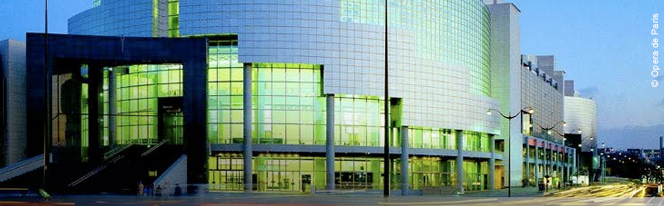
We were witnesses for a standing ovation for over fifteen minutes at the end of a ballet performance in Opera D Bastille, Paris, France  (picture of the building is given below).  It was still continuing when we left the Bastille auditorium and actually do not know the exact duration for which it lasted!
 
Clapping and acknowledging some good effort is a common feature in functions and performances. All over the world  leaders, artistes, sports persons or performers of any kind get encouraged when they receive clapping, applause or an ovation.  A standing ovation is a higher form of acknowledgement of a job well done or a distinction truly earned. An extended applause or a long ovation is indeed an excellent tonic for performers and spurs them to even better efforts in subsequent shows. For a real and dedicated  artiste, appreciation of his or her effort by a mature and knowledgeable audience is worth even more than the financial rewards a show brings.  Politicians thrive on the applause and ovations of their followers.  That the ovation given to them is by a hired or hijacked audience matters little to such leaders.  An ovation is an ovation for them!  It is not uncommon to hear clapping even before some start their speech or performance.  Such applause may be to prevent the beginning of the ordeal or bring an abrupt end to a painful performance.  Thick skinned as they are, such performers(?) would  have tuned themselves to carry on with their act unmindful of whether the gathering really wants it or not. 

We can hear muted clapping in many functions and such applause by a handful of persons among a big gathering is often embarrassing.  Untimely appreciation by a small section of the crowd creates an awkward situation instead of enthusing the performers.  People sitting through the length of the programs leave the hall minutes before the performance ends, showing scant respect for the efforts of the performers.  In many shows or performances, especially the ones like ballet, drama etc., the artistes are called upon the stage at the end of the show.  Any artiste or backstage support staff member has a right to be introduced to the audience in every show.  After all, the show is a result and end product of  days and months of the hard work by these very people.  Their importance is known to the Producer or Director of the show.  Even if one of them is missing half an hour before the show begins, they may even have a heart attack.  Audience, especially in parts of our country, need to appreciate their importance and contributions by giving a befitting ovation to these artistes.  This should be so irrespective of the likes or dislikes of the individual audience.

The city of Paris, capital of France, is one of the most vibrant cultural centers in the world. Bastille Opera House in Paris is one of the centers dedicated for performing arts.  The place "Bastille" has its own history.  A fort was constructed at this place in the 13th-14th century to protect the eastern part of the city of Paris from the enemies. (Picture of the fort as it existed before storming is given alongside).  The fort was converted into a prison during the time of Louie XIII.  The jail housed about 50 prisoners at a time.  In course of time, this fort prison was used by the ruling elite to curb activities of any nature which was considered by them as against the persons in authority.  When the patience of the oppressed people ran out, they stormed the Bastille fort.  Storming and destroying of the Bastille fort prison happened on 14th July 1789.  This started the famous "French Revolution" and the entire fort was destroyed during the next four months.  14th July is observed as "National day of France" since then.  It is a public holiday and a tradition has developed now to honor the martyrs on that day.

A beautiful building complex has been constructed at the place where the destroyed Bastille fort stood and it was inaugurated on 13th July, 1989. A metro station located at the basement of the building makes visiting the culture center a pleasant experience.  Its main auditorium has 2,703 acoustically consistent seats.  Its stage facilities are considered unique.  The integrated scenery, costume and accessory workshops, as well as its numerous work areas and rehearsal rooms make the Opera Bastille a great modern theater. Its orchestra pit can accommodate as many as 130 musicians and can be covered.  It is mobile and adjustable.  The main stage area is 45 meter high and 30 meter wide.  Its 25 meter depth provides comfort for stage managers to experiment innovation using the scenery turntable.  The stage has 9 elevators which is used in creation of several levels in the shows and the three main elevators fetch the required scenery up from below stage.  Scenery can be stored temporarily between the stage, workshops and rehearsal stage.

Our host in Paris had painstakingly reserved seats for us for a show in this auditorium on 13th July 2008, which was the 19th anniversary of the inauguration of the building and the eve of the "Revolution Day".  The show was titled "Signes" in French, meaning "Signs" in English.  It was a wonderful show and the standing ovation given to the Director and artistes lasted for over fifteen minutes.  The show itself  was wonderful in concept, design and on-stage execution.  As this piece has already become lengthy, it will be covered in another blog post titled "Painter meets Musician".