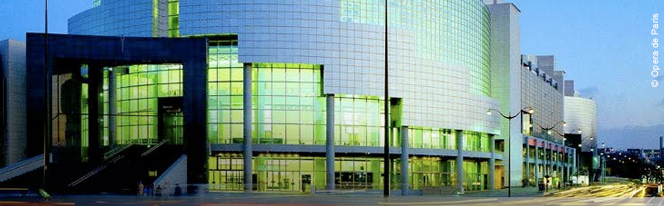
In the post titled "Ovation for over 15 minutes" (click HERE to read it) I had mentioned about the encouragement given by the audience to the performers in a ballet show at Opera De Bastille in Paris, France on 13th July, 2008. The ballet was titled "Signes" in French, meaning "Signs" in English. It
was a delightful show and the Director and
artistes won the hearts of the audience. The show itself was wonderful in concept, design and on-stage execution. The director and artistes who performed on the stage received standing ovation for over 15 minutes by an appreciative full house audience.
In a music concert, each performer uses a different instrument that has its own characteristics and special features. A number of instruments, say five violins or trumpets, may also be used to provide enhanced sound effects. There may be moments in the duration of the concert when the individual brilliance of an artiste may be savoured by the viewers or listeners, but the emphasis is on the overall impact of the blend of the output of various instruments as planned and executed. Likewise, when there is a confluence of two or more forms of fine arts, their collective impact gives out an exhilarating experience. A layman would certainly derive some pleasure out of such concerts, but a trained mind would be able to appreciate the finer aspects even better.
Literature and forms of Performing and Fine Arts like Music, Dance, Painting and Sculpture have their own intertwined relationship, though each one of them have their own domains and individuality. There are innumerable instances where a piece of literature has inspired a host of artistes like dancers and painters to convert words into visual form of expression. This enables the content of the literary piece to reach a far wider audience who may not know the original language of the literature or may even be illiterate. A combination of two performing artistes in different disciplines has often enthralled the audience by their expertise in the fields chosen by them. One such attempt called "Geeta-Chitra" is very popular in our part of the world. In such an exercise, as a poet recites his poem, an artiste starts painting the theme of the poem on a canvas in full view of the audience. Just as the poet completes a poem in five to six minutes, the painting bringing out the essence of the poem is also ready! Similar attempts are also made in other parts of the world. The versatility of such artistes often leave us dumbfound. A standing ovation is probably the only possible way in which we can appreciate their talents.
As we entered the Opera de Bastille auditorium for the ballet titled "Signes" and collected the tickets booked earlier through internet, we were given a booklet with each ticket. The booklet contained all the information about the show and included details about the artistes and the director. We were led into the auditorium five minutes before the show to allow us sufficient time to find our seats and settle down. The 2,703 seat acoustically consistent hall is a magnificent sight. When we go to concerts and shows, we often pray that a short man or woman should occupy the seat in front of us to save us from the prospect of moving our heads in the alternate directions every time the person in front of us moves his head for his convenience! There is no such problem in Opera de Bastille. Even if all the seats are occupied by Amitabh Bachans, there is no need to squirm in our seats since all spectators have a clear view of the entire stage. The entrance doors were closed one minute before the show began and there was no disturbance from late entrants. There were no announcements and the show started on schedule, continued and ended as planned. Not a soul stirred and coughed during the entire period of 90 minutes
The ballet "Signes" is the result of the efforts of three artistes, musician Rene Aubrey who designed the music, choreographer Carolyn Carlson and painter Oliver Debre who designed the sets and costumes. The effect of the paintings was transformed into visual and audio treat to the viewers. The ballet is divided into seven paintings on the theme of smile, as under:
The combined effect on the audience was reflected in "Standing Ovation" for over fifteen minutes and was indeed well deserved.
In a music concert, each performer uses a different instrument that has its own characteristics and special features. A number of instruments, say five violins or trumpets, may also be used to provide enhanced sound effects. There may be moments in the duration of the concert when the individual brilliance of an artiste may be savoured by the viewers or listeners, but the emphasis is on the overall impact of the blend of the output of various instruments as planned and executed. Likewise, when there is a confluence of two or more forms of fine arts, their collective impact gives out an exhilarating experience. A layman would certainly derive some pleasure out of such concerts, but a trained mind would be able to appreciate the finer aspects even better.
Literature and forms of Performing and Fine Arts like Music, Dance, Painting and Sculpture have their own intertwined relationship, though each one of them have their own domains and individuality. There are innumerable instances where a piece of literature has inspired a host of artistes like dancers and painters to convert words into visual form of expression. This enables the content of the literary piece to reach a far wider audience who may not know the original language of the literature or may even be illiterate. A combination of two performing artistes in different disciplines has often enthralled the audience by their expertise in the fields chosen by them. One such attempt called "Geeta-Chitra" is very popular in our part of the world. In such an exercise, as a poet recites his poem, an artiste starts painting the theme of the poem on a canvas in full view of the audience. Just as the poet completes a poem in five to six minutes, the painting bringing out the essence of the poem is also ready! Similar attempts are also made in other parts of the world. The versatility of such artistes often leave us dumbfound. A standing ovation is probably the only possible way in which we can appreciate their talents.
As we entered the Opera de Bastille auditorium for the ballet titled "Signes" and collected the tickets booked earlier through internet, we were given a booklet with each ticket. The booklet contained all the information about the show and included details about the artistes and the director. We were led into the auditorium five minutes before the show to allow us sufficient time to find our seats and settle down. The 2,703 seat acoustically consistent hall is a magnificent sight. When we go to concerts and shows, we often pray that a short man or woman should occupy the seat in front of us to save us from the prospect of moving our heads in the alternate directions every time the person in front of us moves his head for his convenience! There is no such problem in Opera de Bastille. Even if all the seats are occupied by Amitabh Bachans, there is no need to squirm in our seats since all spectators have a clear view of the entire stage. The entrance doors were closed one minute before the show began and there was no disturbance from late entrants. There were no announcements and the show started on schedule, continued and ended as planned. Not a soul stirred and coughed during the entire period of 90 minutes
The ballet "Signes" is the result of the efforts of three artistes, musician Rene Aubrey who designed the music, choreographer Carolyn Carlson and painter Oliver Debre who designed the sets and costumes. The effect of the paintings was transformed into visual and audio treat to the viewers. The ballet is divided into seven paintings on the theme of smile, as under:
- The sign of smile
- Loire am
- Guilin Mountains
- Monks of the Baltic
- The Spirit of the blue
- Colors of Madurai
- Victory Signs
The combined effect on the audience was reflected in "Standing Ovation" for over fifteen minutes and was indeed well deserved.
Visit to historic Bastille site, view of the Bastille building and sitting through the Ballet "Signes" was a memorable experience and is still fresh in our minds, even after five years.