He was flying in the sky using freshly acquired wings. The body was left behind, dead. He was indeed conscious and aware of the flight taking him somewhere, far away. He could see many boards displayed on the way, in the sky. He could not read any of them as he was not familiar with the script or language used in those boards. Finally, he saw a board written in his mother tongue. He was thrilled to read it: "Way to Hell". Though the board said it was way to hell, he was happy because it was the only board he could read among the scores of them. He proceeded on the way to hell. A strong voice thundered at him - "You are not allowed here. Go on the path of Heaven". He shifted the path and now proceeded on the path to heaven. The delightfully decorated main door of the heaven before him was closed. He stood and waited for it to open. The guard's voice called out to him.
"Who is that?"
"I am Puttappa"
"Which Puttappa?"
"K V Puttappa"
"Who is that?"
He was astounded. What is the arrogance of this nectar fed angel guard, he thought. Everyone knows me by that name. How does he not know, he wondered. He tried another line now.
"I am Ku. Vem. Pu."
He should definitely know this. The door should open now, he waited. Derisive laughter was the answer. He went on giving further other answers to prove his identity.
"Assistant Professor"
"Professor"
"Principal"
"Vice Chancellor"
"Padma Bushana"
"Rashtra Kavi"
"All that has no value here. Tell me what does your heart and soul says.....", asked the guard. He did not know what to say. He had exhausted all his identities. He stood there blushing and thinking. He made up his mind and tried the last identity.
"I am Hemi's husband" (He remembered the wife's name..... Hemavathy!)
Oh, the door opened and he entered heaven.
He woke up from a great dream............
This is a near translation of a delightful prose-poem of KUVEMPU, one of modren Kannada's (Navodaya) foremost and well-known poets. He was one of the earliest recipients of the "Jnanapeeth Award" and Vice-chancellor of Mysore University.
That poem was written some sixty years ago.....
"Appaiah Deekshitar is a well known Advaita Vedanta scholar, they say. He has traveled allover the country and defeated many stalwarts of other faiths in debate. He has written more than 100 valuable works. Appreciating his scholarship and efforts, Vellore King Chinna Bomma Nayakkar had arranged a "Swarnabhishekam" (ritual of a person being showered with gold coins) for him. He has returned to our place after the festival in Vellore. He is being taken in the streets in a big procession. Hence the noise"
Subbajji did not understand the details and did not understand who this Appaiah Deekshitar was. She herself slowly walked to the door and saw the procession. As the procession neared her house, she could identify the person being taken in procession.
"Padma, you are telling so many useless details. I know him very well. He is our Acchamma's husband!"
That was more than four hundred years ago.....
That was forty seven years ago.....
"Who is that?"
"I am Puttappa"
"Which Puttappa?"
"K V Puttappa"
"Who is that?"
He was astounded. What is the arrogance of this nectar fed angel guard, he thought. Everyone knows me by that name. How does he not know, he wondered. He tried another line now.
"I am Ku. Vem. Pu."
He should definitely know this. The door should open now, he waited. Derisive laughter was the answer. He went on giving further other answers to prove his identity.
"Assistant Professor"
"Professor"
"Principal"
"Vice Chancellor"
"Padma Bushana"
"Rashtra Kavi"
"All that has no value here. Tell me what does your heart and soul says.....", asked the guard. He did not know what to say. He had exhausted all his identities. He stood there blushing and thinking. He made up his mind and tried the last identity.
"I am Hemi's husband" (He remembered the wife's name..... Hemavathy!)
Oh, the door opened and he entered heaven.
He woke up from a great dream............
This is a near translation of a delightful prose-poem of KUVEMPU, one of modren Kannada's (Navodaya) foremost and well-known poets. He was one of the earliest recipients of the "Jnanapeeth Award" and Vice-chancellor of Mysore University.
That poem was written some sixty years ago.....
*****
There was an unusual noise on the street. Subbajji was curious to know the reason for it. She asked her grand daughter to go and find out. Padma returned and told her grand mother that it was a procession of someone named Appayya Deekshitar. Subbajji was not satisfied. She asked Padma to find out full details. Padma ran out again and returned with some more information. "Appaiah Deekshitar is a well known Advaita Vedanta scholar, they say. He has traveled allover the country and defeated many stalwarts of other faiths in debate. He has written more than 100 valuable works. Appreciating his scholarship and efforts, Vellore King Chinna Bomma Nayakkar had arranged a "Swarnabhishekam" (ritual of a person being showered with gold coins) for him. He has returned to our place after the festival in Vellore. He is being taken in the streets in a big procession. Hence the noise"
Subbajji did not understand the details and did not understand who this Appaiah Deekshitar was. She herself slowly walked to the door and saw the procession. As the procession neared her house, she could identify the person being taken in procession.
"Padma, you are telling so many useless details. I know him very well. He is our Acchamma's husband!"
That was more than four hundred years ago.....
*****
Narasinga Rao was a popular Kannada playwright, stage and film actor, producer and director. His 75 stage plays have been presented on the Kannada stage many times over. He is better known through his pen name, Parvatavani. He was invited to the wedding reception of a daughter of his long time friend who was also a writer, actor and director. Parvatavani came to the function and presented a book to the newly wed couple. He did not worry to remember the name of the boy, but knew the girl since her childhood. He wrote on the first page of the book, "With best wishes to Geetha and Geethapriya". The book is still a prized possession with the couple.That was forty seven years ago.....
*****
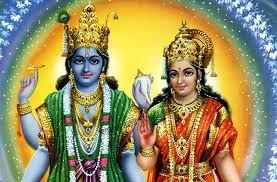
Identity being established through above methods is not a rare practice. In discourses like "Harikathe", which is an art form of story telling in which poetry, music and even dance at times are used, the Lord in whose praise the performance takes place is often remembered from time to time.
If it is Lord Shiva, the chant goes, "Hara Namah Parvati Pataye.... Hara Hara Mahadev"
If it is Lord Vishnu, the chant is "Indira Ramana Govinda...... Govinda"
With these chants, identity of the Lord is established. But with Lord Vishnu, the artiste or discourse giver does not want to take any risk. He establishes his address as well. The Lord may have many wives as per the incarnations he takes from time to time. But there is only one eternal servant for the Lord: Anjaneya alias Bhajarangabali. Hence the chant is:
"Aanjaneya varada Govinda......... Govinda!"
With these two chants together, both identity as well as address of the Lord is well established and there is no risk of wrong delivery!

